
My Story: Why I Created Serenity Flywheel
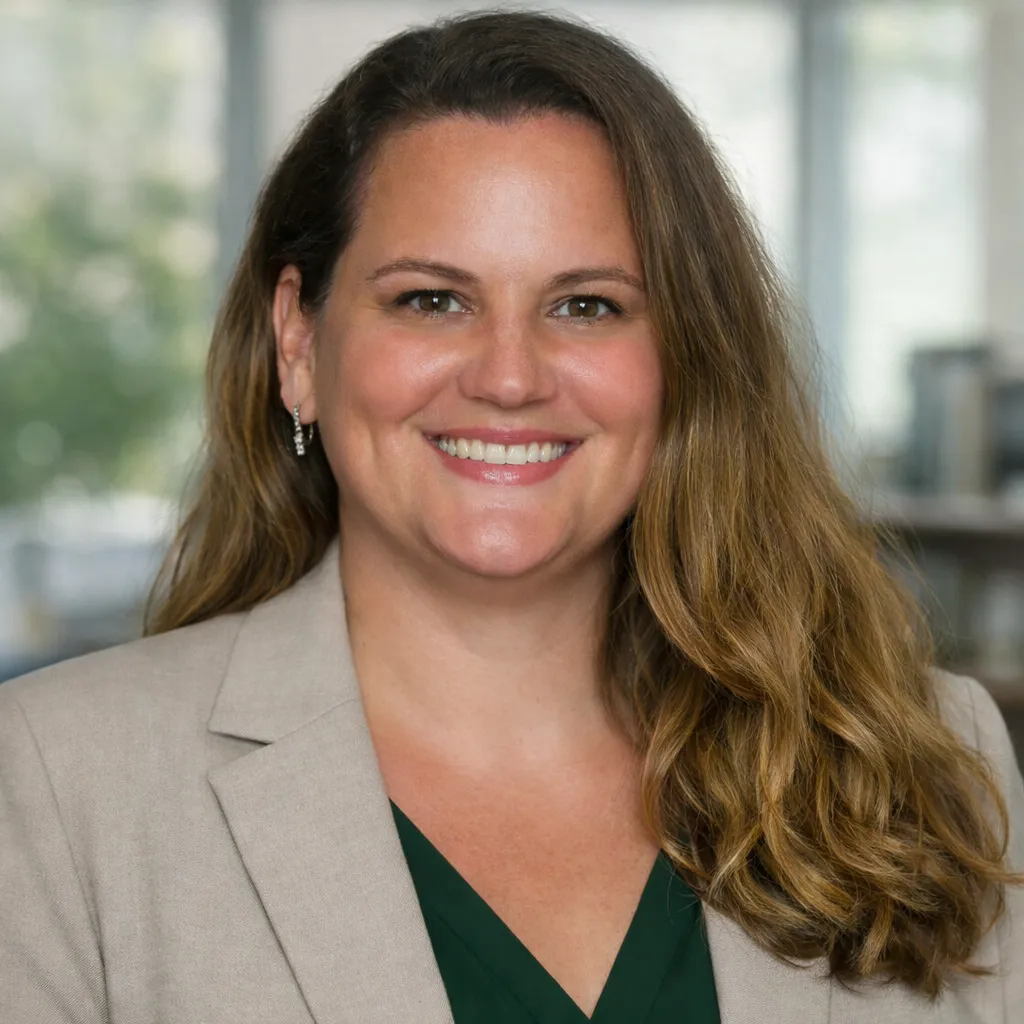
Hello, I’m Jill Knight!
I knew how money worked on paper. That didn't mean I knew how to feel secure with it.
I knew how money worked on paper. That didn't mean I knew how to feel secure with it.
For 20 years, I worked in corporate finance at companies like Delta Air Lines, Iron Mountain, and TK Elevator. I have a BA from Georgia State University and an MBA from Georgia Tech. That MBA cost $75,000.
I read balance sheets for a living. I understand compound interest, amortization schedules, the time value of money—all that good stuff. On paper, I was the last person who should have felt insecure about money.
And yet, I did.
Because understanding how money works and knowing how to build a healthy relationship with it are two very different things.
Nobody taught me how to be an adult with money.
Nobody taught me how to be an adult with money.
I went through school in a fairly straightforward, lockstep curriculum. I took the required classes, passed my exams, graduated, and moved on to the next thing.
But nobody taught me how to manage money.
Nobody sat me down and explained how credit really worked, how to make decisions about debt, how to build financial security,
or how to plan for a future that might look very different from the life I was living at the time. What was accidentally taught to me was that money was the solution to all problems, and
Then I graduated, got a job, and became an adult.
It felt like jumping onto a treadmill already running at full speed. Everyone seemed to assume I knew what I was doing. I was
supposed to pay bills, manage credit, make big financial decisions, and somehow know how to prepare for the future.
I didn't. And I didn't know what I didn't know.
I grew up without much financial security, so I didn't have a strong foundation to fall back on. Within a couple of years of entering adulthood, I'd accumulated more than $20,000 in high-interest debt, with very little to show for it.
My credit score was low. I ended up in credit counseling, which helped me pay off the debt. That was an important step, but it didn't change the way I felt about money. I went right back to avoiding it.
I built a small emergency fund and parked it in a low-interest savings account. I bought a house in my late twenties, when mortgage lending standards were remarkably loose, and told myself I was doing fine.
As long as I didn't look too closely, I could avoid the anxiety that came with wondering whether I was actually doing fine.

I saw what happens when money has no plan.
Some of my relationship with money came from watching my parents manage our household finances.
My dad controlled the money, saving was practically nonexistent, and things tended to swing between feast and famine—usually famine.
When I was 11, my family received an inheritance after my grandfather passed away. My parents put in central air conditioning (much needed in Atlanta), bought new living room furniture, and...
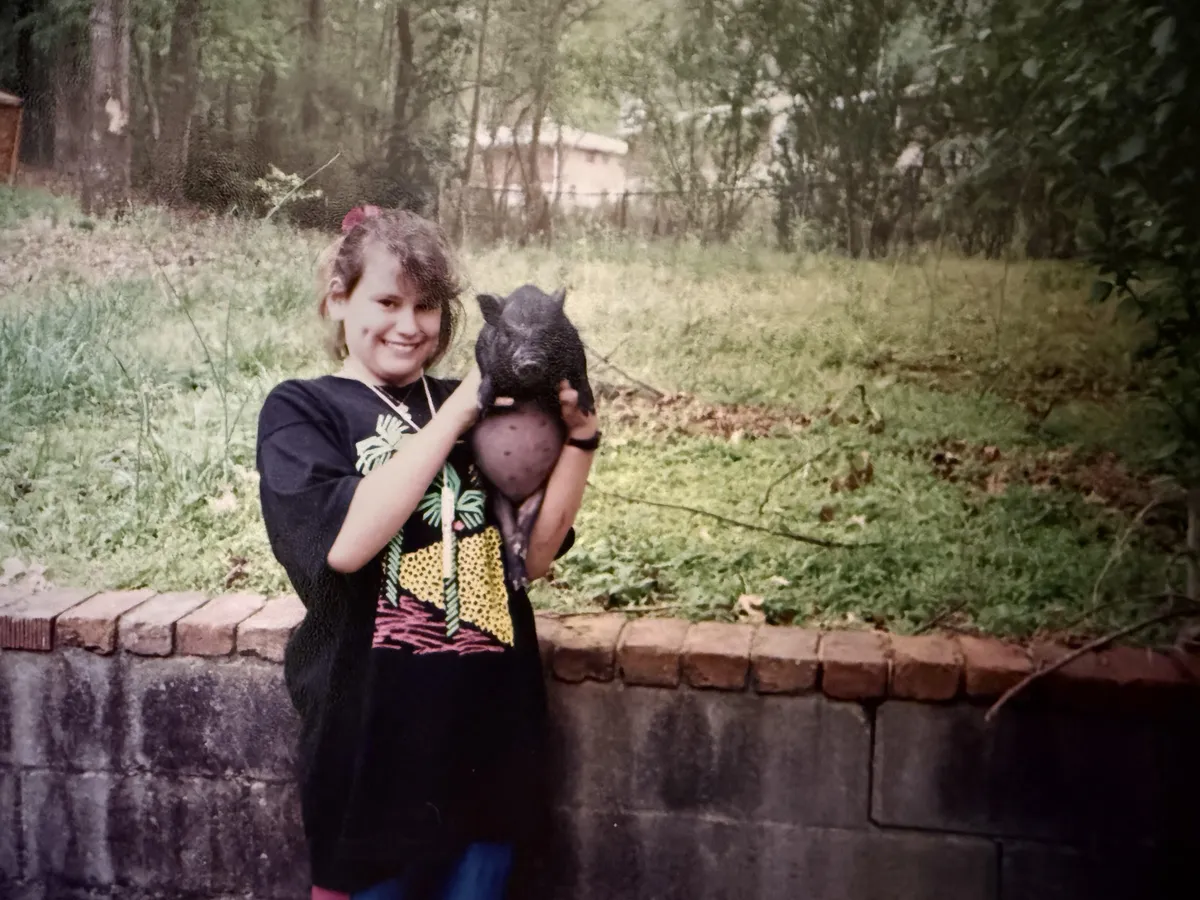
...they bought a piglet.
Not just any piglet. A Vietnamese Pot-Bellied piglet.
Her name was Charlotte.
According to my memory of what the breeder told us, she descended from the original 18 pigs brought to the United States in the 1980s. My parents paid $3,500 for her—roughly $8,600 in today's dollars.
I still don't fully understand the logic of buying a champion-stock piglet when our family finances were in such bad shape.
Judging by Charlotte's face, I suspect she had some opinions about the decision, too.
Now, I loved Charlotte. She was a big hit at my elementary school, and long after she crossed the rainbow bridge, she remains one of my favorite facts to trot out at corporate icebreakers. I have no regrets that my parents bought her.
But they had absolutely no business buying her when our finances were so precarious.
Charlotte became an unforgettable example of something I've seen play out in many different ways since: money arriving without a plan doesn't automatically create financial security.
That applies to an inheritance, a bonus, a raise, or a much bigger paycheck. More money can certainly help. But without a plan for what that money needs to do, it's easy to find yourself in the same place you started.
I saw another painful example of that lesson when my father fell for a scam that cost him $60,000 of the limited retirement money he'd inherited from his father-in-law.
That loss stayed with me. It was a reminder that financial vulnerability isn't simply about how much money you have. It's also
about the knowledge, habits, systems, and safeguards you have in place to protect it.
And it isn't just a problem for people who don't earn much. Smart, capable people can be vulnerable, too.
I thought earning more money would fix everything.
My mom pushed my brother and me toward high-income careers. For her, more money was always supposed to be the answer.
And income does help. I'm not going to pretend otherwise.
But I eventually realized that I had adopted the same belief. I kept thinking, If I just made more money, then…
Then I'd feel secure. Then I'd know what I was doing. Then I could stop worrying.
I even caught myself thinking that if I had a husband, he could handle the money part.
Looking back, I can see that I was treating money as something that happened to me, rather than something I could learn to manage intentionally. I was waiting for circumstances to change instead of getting in the driver's seat.
By my thirties, I knew that simply covering the bills wasn't enough. I wanted to understand why the idea of investing made me feel sick, why I could earn more and still feel like it wasn't enough, and why looking at my finances could provoke so much anxiety.
So I started asking questions. I looked more closely at my own habits, assumptions, fears, and decisions. I learned how to make my money work more intentionally for me, rather than simply hoping things would work out.
Slowly, the relationship changed.
I figured it out—but I shouldn't have had to figure it out alone.
Over time, I went from having a very low credit score (I'm not sure how low it got, because I was too scared to look once it dropped below 550) to an 840. I built financial knowledge and habits I hadn't learned in school. I came to understand investing, built a portfolio that includes investment properties, and developed a much clearer picture of how my financial decisions fit together.
Those changes didn't happen because I suddenly became a different person or developed superhuman discipline.
They happened because I learned how to approach money differently.
I learned to look at the numbers without treating them as a verdict on my worth. I learned to make decisions with a bigger picture in mind. I learned that financial progress isn't one grand gesture or a perfect budget. It's a series of intentional choices, supported by a system you can return to even when life gets complicated.
I had to piece those lessons together myself. And the more I learned, the more I wondered why something so fundamental to everyday life was something so many of us were expected to figure out on our own.
We learn algebra, history, and biology. We spend years preparing for careers. But many of us enter adulthood without a practical framework for managing the money we'll earn, spend, save, invest, and rely on throughout our lives.
I wanted to help change that.
Why I created Serenity Flywheel
As I shifted my career toward coaching, I recognized a familiar pattern: capable, hard-working people who earned good money but didn't necessarily feel secure with it.
Some avoided looking at their accounts. Some felt ashamed that they hadn't made more progress. Some believed they needed more discipline. Others had tried budgets, spreadsheets, and financial apps, only to find that the tools never quite addressed the underlying problem.
From the outside, they looked successful. Behind the scenes, money still took up too much mental space.
I recognized that experience because I'd lived it myself.
I didn't want to offer another budget or a list of rules people were supposed to follow. I wanted to help people build a practical system for understanding where they stand, making intentional choices, and moving forward without constantly judging themselves.
That became the foundation of Serenity Flywheel.
The program is built around five connected pillars:
Clarity: Know where you stand, without shame or avoidance.
Alignment: Make your money reflect what matters to you.
Progress: Turn intentions into manageable actions.
Stability: Build a foundation that supports you through life's changes.
Confidence: Develop greater trust in your ability to make financial decisions.
Together, these pillars offer a framework for building a more intentional relationship with money—not by trying to become a perfect financial person, but by learning how to work with the money you have and the life you want.
You don't have to figure it all out alone.
If you earn a good income but still feel uncertain about money, I want you to know that you're not the only one. And you don't have to wait until you earn more, become more disciplined, or finally get everything right to start making changes.
You can start where you are.
You can get curious instead of judgmental. You can learn to look at your finances without shame. You can build a system that helps you make decisions with greater clarity and intention.
That's what I want Serenity Flywheel to offer: a practical path toward feeling more secure with your money, more confident in your decisions, and more able to enjoy the life you're working so hard to build.
You don't need another budget. You need a money system.
And you deserve to have one that works for you.
©2026 Highland Horizon LLC
Terms | Privacy Policy | Disclaimer
Educational Disclaimer: Highland Horizon LLC and Serenity Flywheel provide educational and informational content about money management and financial well-being. Our content is not individualized financial, investment, tax, legal, accounting, or other professional advice, and we do not guarantee any particular financial or other result. Your financial decisions and their outcomes are your responsibility. Please consult an appropriately qualified professional regarding your individual circumstances when appropriate.
For additional information, please review our Terms of Service, Privacy Policy, and Disclaimer.